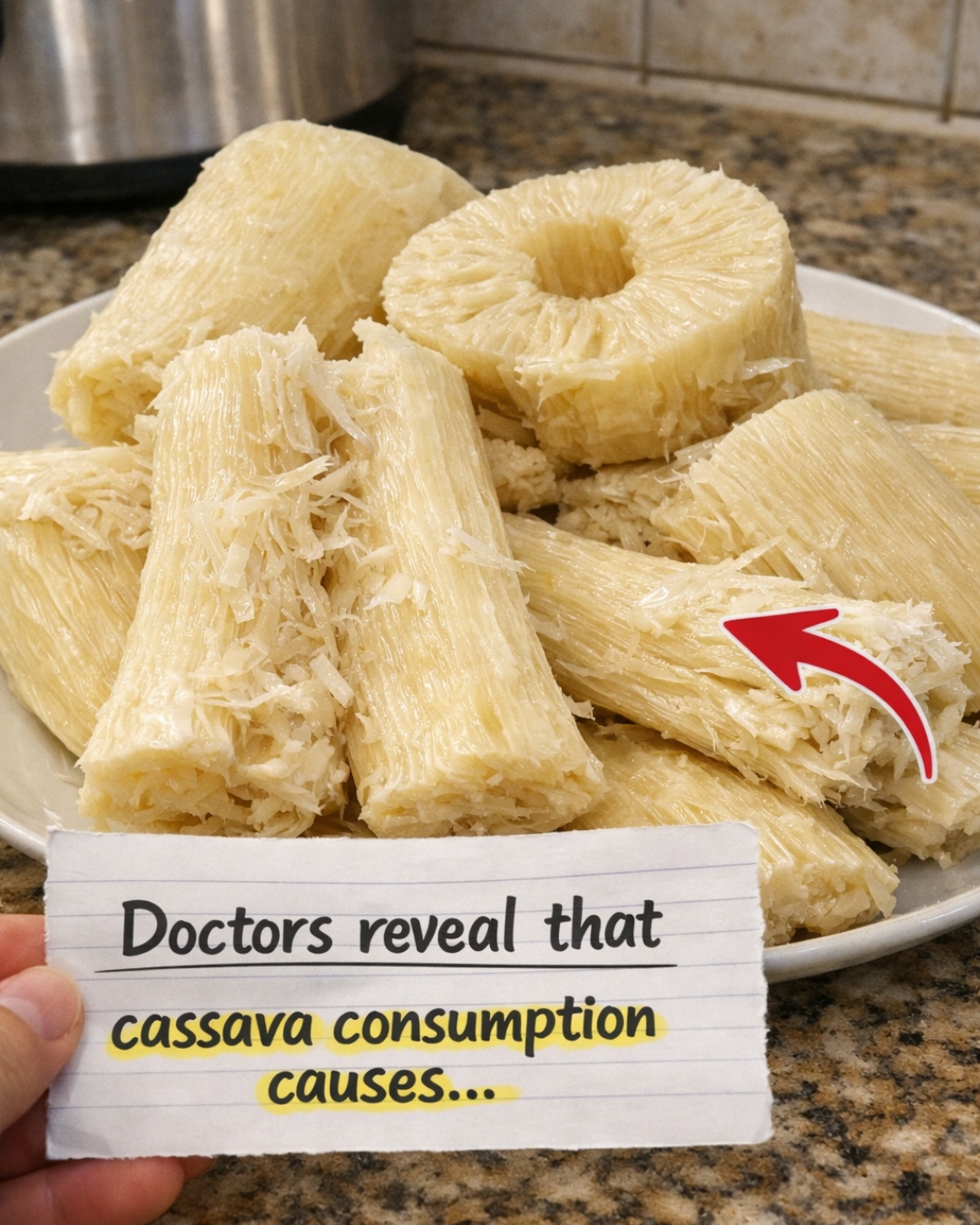
What Is Cassava?
Cassava (Manihot esculenta) is a starchy root vegetable native to South America but now widely grown in tropical climates worldwide. It is known by different names depending on the region:
-
Yuca (not to be confused with yucca plants)
-
Manioc
-
Tapioca root
-
Mandioca
Cassava is rich in carbohydrates and serves as an important energy source. Tapioca pearls and tapioca flour, often used in desserts and gluten-free cooking, are also derived from cassava.
However, cassava also contains naturally occurring compounds that require proper preparation before consumption
Doctors Warn: Cassava Naturally Contains Toxic Compounds
One of the main concerns doctors highlight is that raw cassava contains substances called cyanogenic glycosides. These compounds can release cyanide, a toxic chemical, when the plant tissue is damaged or improperly processed.
This does not mean cassava is automatically dangerous. In fact, millions of people safely eat it every day. The key factor is proper preparation.
When cassava is peeled, soaked, fermented, dried, or thoroughly cooked, most of these harmful compounds are removed or neutralized.
But consuming raw or undercooked cassava may lead to health problem